
Let’s be honest. Most of us have a yard that’s a bit of a mixed bag. There’s a lawn that’s more weed than grass, a garden bed that gave up in 2022, and a corner where the wheelie bins and the old barbecue are having a quiet standoff.
Here’s the good news. You don’t need a $60,000 makeover or a TV crew to fix it. Small changes, big impact are the whole game, and it’s how the team at Better Price Gardening & Landscaping approaches most Sydney yards. A few smart tweaks, done in the right order, can change how a yard looks, feels and functions. They can also lift your home’s street appeal without emptying your wallet.
Whether you’ve got a postage-stamp courtyard in the inner west or a sprawling block out Macarthur way, these gardening and landscaping ideas work for just about any yard.
Why Small Changes Beat a Full Makeover (Most of the Time)
A full landscape rebuild has its place. But for most households, the biggest wins come from fixing the things that catch the eye first: tired edges, bare soil, patchy grass, gloomy corners and cluttered entries.
Small upgrades also let you spread the cost. Do the mulch and edging this month, the planting next season, and the lighting when the tax refund lands. You get momentum without the stress, and you can see what works before committing to the big stuff.
Yard transformations also tend to go wrong when people start at the wrong end. Buying plants before sorting the soil, or laying pavers before working out drainage, is a classic recipe for regret. The ideas below run roughly in the order a good gardening services crew would tackle them.
- Define the Edges and Everything Looks Tidier
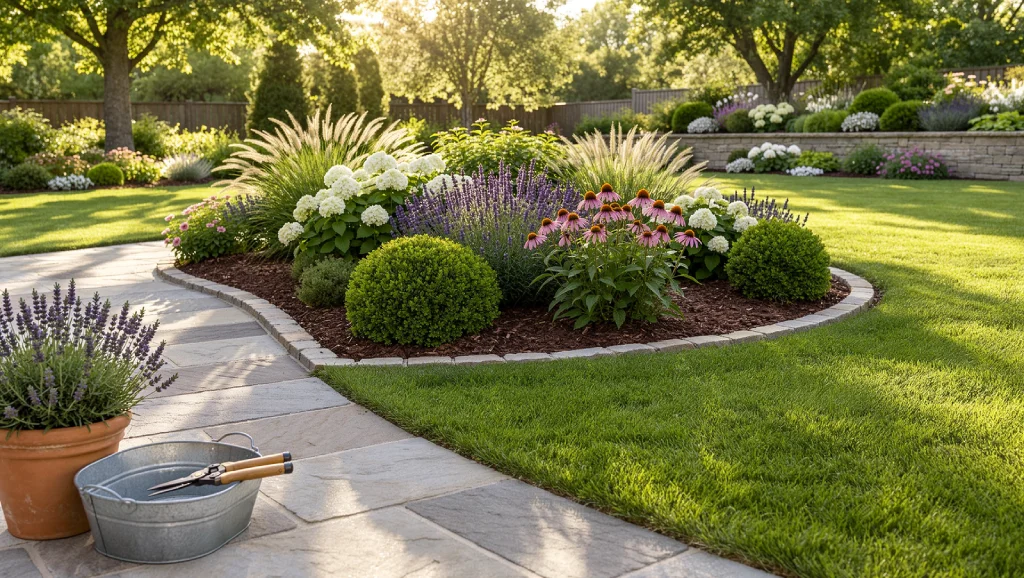
If you only do one thing, do this. A crisp line between lawn and garden bed makes a yard look cared for, even if the plants are still growing in.
Cut a clean trench with a half-moon edger, or install steel or brick edging if you’re sick of the couch grass creeping in. It’s the cheapest trick in the book, and it’s the one people notice from the footpath.
- Mulch like You Mean It
Mulch is the unsung hero of Sydney gardens. A layer of around 50 to 75 millimetres of quality mulch:
- Keeps soil cooler through those 35-degree western Sydney summers
- Cuts back weeds so you’re not out there with a trowel every weekend
- Holds moisture between waterings
- Breaks down over time and feeds the soil
Keep it a few centimetres away from trunks and stems so plants don’t rot, and top it up once a year. That’s a small job with a proper big-impact payoff.
- Know Your Soil Before You Buy a Single Plant
Sydney soil is not one-size-fits-all, and this is where local knowledge earns its keep.
Out west, heavy clay is common. It’s rich in nutrients but drains slowly, so it goes soggy after rain and cracks in a dry spell. Closer to the coast, you’re more likely to deal with sandy, shallow soil and salty wind. Inner-west blocks often mean older, compacted soil with a few decades of building rubble mixed in.
The fix depends on where you are:
- Clay: add organic matter and gypsum, and consider raised beds for anything fussy
- Sandy soil: add compost and mulch to hold water and nutrients
- Compacted soil: aerate, then top-dress
If you’re around Campbelltown, a gardener in Eagle Vale will tell you the same thing. Get the dirt right first, and everything you plant afterwards has a fighting chance.
- Plant in Layers (and Pick Plants That Suit Sydney)
A flat row of shrubs along the fence is the landscaping equivalent of a beige wall. Layer it instead:
- Tall at the back: small trees or feature shrubs, like a lilly pilly or a compact Japanese maple
- Mid-height in the middle: grevilleas, correa, hebe or cordyline
- Low at the front: lomandra, dianella, native violets or a hardy groundcover
A tip from the design world: deeper garden beds make a yard look bigger, not smaller. Skinny strips along the fence line can actually shrink the space visually, so consider widening your beds a touch.
Native and climate-tough plants are your mates here. They handle Sydney’s heat, they need less water once established, and they bring in the birds and native bees. A few well-chosen plants beat thirty random ones from the bargain trolley.
- Give the Lawn a Proper Refresh
You don’t have to rip out the lawn. Often it just needs a bit of love:
- Mow at the right height, and don’t scalp it
- Aerate compacted patches
- Fertilise in the warmer months
- Spot-patch bare areas, or lay new turf if it’s beyond saving
- Water deeply and less often, ideally early in the morning
Warm-season grasses like buffalo, kikuyu and couch suit most of Sydney, but the right picks depends on how much shade you get and how many kids and dogs are tearing around. Shady yard? Choose a shade-tolerant buffalo. Dog with zero respect for turf? You need something tough.
Fairfield’s mix of older homes and family backyards is a good example. If you’re chasing reliable gardening in Fairfield, regular mowing, edging and fertilising will do more for the property than any single big project.
- Add One Focal Point
Every good yard has something for the eye to land on. It doesn’t need to be huge:
- A feature pot in a bold colour
- A small water bowl or bubbling fountain
- A sculptural tree or a nice gate
- A simple stone path leading somewhere interesting
Pick one and let it do the heavy lifting. Too many features and your yard looks like a garden centre had a sneeze.
- Light It Up
Outdoor lighting is a cheap upgrade that changes how you use your yard after dark. Solar path lights, warm LED uplights on a feature tree, or festoon lights over a deck all work well. Lighting also adds a bit of security and helps you enjoy the yard on those long summer evenings.
Go warm white, not stadium white. You’re setting a mood, not lighting up a cricket ground.
- Make the Hard Surfaces Work Harder
Cracked concrete, wonky pavers and stained paths drag down an otherwise good yard. A pressure clean and reseal can work wonders. Re-laying a few dodgy pavers or adding a small paved seating area is often more valuable than any plant.
Sloping block? Small retaining walls can create flat, usable zones and stop soil washing out during storms. Around Georges Hall and the surrounding Bankstown area, flat family blocks often just need a defined path, a clean paved patch and neat garden beds. If that sounds like your place, a local gardener in Georges Hall can sort the lot in one visit.
- Small Yard? Go Up, Not Out
Courtyards and tiny backyards can still punch above their weight:
- Vertical gardens or wall planters for herbs, ferns and succulents
- Climbers like star jasmine or native sarsaparilla on trellises
- Light-coloured surfaces to reflect light and make the space feel bigger
- Multi-purpose furniture that doubles as storage
Haberfield is a perfect case study. As Australia’s first garden suburb, it’s known for heritage homes and character streetscapes, and often for small, well-loved front gardens. If you’re after Haberfield garden maintenance, the aim is usually to keep that heritage charm while making the space easier to look after.
- Set Up a Maintenance Rhythm
This one’s the secret sauce. The best-looking yards in Sydney aren’t the ones with the biggest budgets. They’re the ones that get a bit of attention regularly.
A simple routine does the trick:
- Weekly or fortnightly: mow, edge and quick tidy
- Monthly: weed, check irrigation, deadhead
- Seasonally: prune, fertilise, mulch, replace tired plants
- Yearly: big tidy-up, soil check, hard surface clean
If the weekend feels too precious for this, that’s what professional gardening services are for.
How a Landscaper or Gardener Actually Works With You
A lot of people put off calling someone because they’re not sure what happens next. Here’s what the process usually looks like with Better Price Gardening & Landscaping:
- You tell us what’s bugging you. Weedy garden beds, boring lawn, a yard you never use? Bring the wish list.
- We look at the yard. Site conditions, soil, sun, drainage and access all shape the plan.
- You get a clear scope and quote. No mystery line items.
- We do the work. Whether it’s a one-off tidy-up or a proper landscape refresh, the job gets done properly.
- We clean up. Green waste and rubbish gets taken away.
- Optional ongoing care. Regular visits keep the yard looking sharp so you don’t slide back to square one.
Local Yards, Local Know-How
Yards behave differently depending on where you live. That’s why local experience counts.
- Earlwood: older brick homes, established trees, and often sloping blocks. A landscaper in Earlwood will think about drainage, retaining and shade before picking plants.
- Fairlight: sandy soil, sea breezes and steep sites are all part of the deal. If you need a Fairlight landscaper, look for someone who understands coastal-tough planting and clever use of space.
- Girraween: family blocks that need to handle kids, pets and barbecues. A landscaper in Girraween can create zones for play, relaxing and growing.
- Harrington Park: newer estates with big blank-canvas yards and lots of clay. Working with a Harrington Park landscaper is a great way to turn a builder-bare lawn into a proper garden.
Different suburbs, different challenges. Same idea: small, smart changes, done properly.
DIY or Call a Pro? A Quick Reality Check
Plenty of these jobs are weekend-friendly. Mulching, edging, planting and pot arrangements are all very doable with a spare Saturday and a slab of something cold.
Call a professional when:
- The job involves retaining walls, drainage or significant levelling
- You’ve got large trees, heavy green waste or awkward access
- You want a full design instead of a series of guesses
- You simply don’t have the time (no judgement, life’s busy)
The right help saves money by avoiding mistakes. Redoing a badly built garden bed costs more than doing it right the first time.
FAQs about Gardening and Landscaping Ideas
How much should I budget for small yard upgrades? It depends on the scope, but starting with edging, mulch and planting is far cheaper than a full rebuild. A site visit and quote will give you real numbers for your yard. Ask for the work to be broken into stages so you can spread the spend.
What’s the best time of year to plant in Sydney? Autumn and early spring are usually the sweet spots, because soil is warm and heat stress is low. Summer planting can work if you’re happy to water more often.
Do I need council approval for landscaping changes? Most garden work doesn’t, but retaining walls above a certain height, tree removal, and works in heritage conservation areas (like Haberfield) may need approval. Check with your local council before you start.
Can I keep my garden low-maintenance without it looking boring? Absolutely. Use hardy natives, deep mulch, drip irrigation and a couple of feature plants. Low-maintenance doesn’t have to mean concrete and a lonely succulent.
How do I stop my yard flooding or going boggy after rain? Look at grading, soil type and where the water flows. Sometimes it’s as simple as regrading a section or adding a soakaway or ag drain. For clay soils especially, improving structure makes a big difference.
How often should a gardener visit? For lawns and general upkeep, fortnightly or monthly visits suit most Sydney homes. Fast-growing seasons like spring and summer might call for more.
Which watering rules apply in Sydney? Sydney Water has Water Wise Rules that cover things like hose use and sprinkler times. Rules can change, so check their website for the current version before setting up your watering routine.
Ready to Make the Small Changes That Count?
You don’t need to overhaul everything. Pick two or three ideas from the list above, start with the basics, and build from there. That’s how a sad little yard turns into somewhere you actually want to spend your weekend.
If you’d rather have a hand, Better Price Gardening & Landscaping can take care of the gardening, landscaping and ongoing upkeep across Sydney. Have a chat, tell us what’s bugging you about your yard, and let’s make some small changes with a big impact.