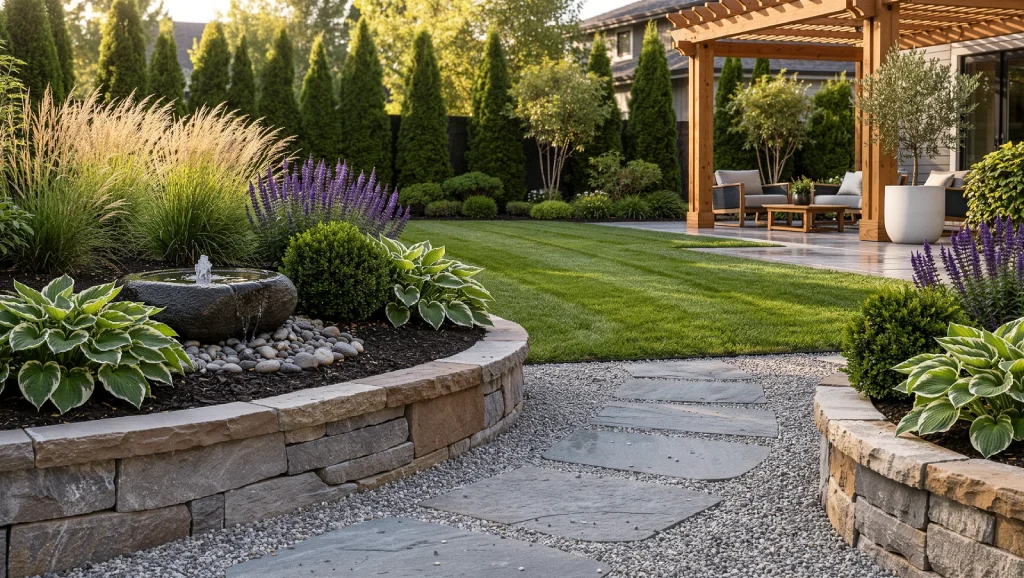
You know the house. Every street has one. Nothing fancy about the place itself, but the garden makes people slow down, and the neighbours quietly hate them for it.
Here’s the secret: that garden probably didn’t cost a fortune, and the owner probably isn’t a horticultural genius. It just gets a handful of fundamentals right. At Better Price Gardening & Landscaping, we’ve seen the same handful of elements separate a yard that looks designed from one that just looks planted.
So, what makes a garden look well landscaped? Let’s walk through the seven key elements, plus a few Sydney-specific curveballs, and a few honest laughs along the way.
- A Plan before the Plants (Yes, Really)
The number one mistake we see? Someone drives to the nursery on a Saturday, falls in love with six different plants, and jams them into whatever gap is nearest. Three months later the yard looks like a lucky dip.
A well-landscaped garden starts with layout and flow. Before a single shrub goes in, ask:
- Where do people actually walk, and where do they want to walk?
- What do you see from the kitchen window and the front door?
- Which parts of the yard get full sun, and which sit in shade all day?
- Where does water go when it buckets down?
Get this right and everything else falls into place. Get it wrong and you’ll be paying for a redo. A professional gardening services team will map these zones first, because the plan is the cheapest part of the whole job and the most expensive part to skip.
Quick tip: Stand in your yard at 7am, noon and 4pm. Note where the sun sits. That five-minute exercise beats any Pinterest board.
- Hardscaping: The Bones Your Garden Hangs On
Plants get the glory, but hard landscaping does the heavy lifting. Paving, retaining walls, steps, edging, pergolas and fencing give a garden its structure, and structure is what makes a yard look intentional.
Think of it like a good outfit. The plants are the accessories, and the paving and walls are the tailoring. Cheap tailoring shows, no matter how nice the scarf.
What to look for in quality hardscaping:
- Consistent materials. Two or three that works together, not seven that argue.
- Proper base preparation. Paving that dips after one wet summer wasn’t laid on a proper base.
- Sensible levels. On sloping blocks, a well-built retaining wall creates usable flat space and stops soil migrating down to your neighbour’s place.
- Clean lines. Straight edges feel formal and modern, curves feel relaxed and coastal. Pick a lane.
If your block has a decent fall, a local landscaper in Baulkham Hills will tell you the same thing: manage the slope first, and then worry about the pretty bits.
- Layered Planting That Doesn’t Look Like a Car Park
Ever notice how a flat row of identical shrubs along a fence looks a bit… council? Well-landscaped gardens use layers.
- Canopy: trees that give shade, height and a sense of maturity.
- Mid-layer: shrubs, ornamental grasses and feature plants.
- Groundcover: low spreaders that fill gaps, suppress weeds and finish the bed.
Planting in odd numbers (three, five, seven) and repeating a few key species gives you rhythm without chaos. It’s the “less is more, but do it more than once” rule.
Choose plants for your conditions, not your mood. A gorgeous shade-lover in a blasting western sun is a dead plant with a receipt. Sydney’s microclimates are wild: salty wind near the beach, heavy clay out west, dry shady corners under established trees. The right species for the right spot is the difference between a garden that thrives and one that needs constant CPR.
And a nod to our natives: banksias, grevilleas, lomandra and native grasses handle Sydney’s heat and dry spells brilliantly, and they bring the birds. Mix them with a few softer exotics and you get texture with less watering.
- One Hero: The Focal Point
Great gardens know where to point your eyes. A focal point gives the yard a destination, and it doesn’t need to be huge:
- A feature tree, like a Japanese maple or a nicely shaped frangipani
- A water feature or bubbling bowl
- A sculptural pot, a low stone wall or a fire pit
- A pergola with a sneaky seating spot underneath
The trick is one hero. Two is a debate, and five is a garage sale. Place it where you’ll see it from indoors, and the whole yard suddenly feels bigger and more considered.
- Lighting: Because Gardens Exist After 6pm Too
Here’s a fact that surprises people: half the time you actually look at your garden, it’s dark. Winter evenings, a barbie after work, a quick trip to the bins. Good garden lighting turns the same yard into a different place.
Keep it subtle:
- Uplights on feature trees add drama.
- Path lights are practical and safe.
- Warm white globes beat cold blue every time.
- Low-voltage or solar keeps running costs minimal.
Aim to light the effect rather than the source. If you can see the bulbs, you’ve overdone it. If the neighbour’s asked whether you’re opening a nightclub, definitely overdone.
- The Finishing Details: Edges, Mulch and Lawn
This is where average gardens become good ones, and it’s the cheapest upgrade going.
Crisp edges. A clean line between lawn and garden bed instantly says “someone cares here.” Steel, brick or a well-cut trench all work.
Fresh mulch. Two to three inches of quality mulch suppresses weeds, holds moisture through Sydney’s dry stretches and gives beds a uniform, polished look. Keep it off the plant stems, or you’ll invite rot.
A lawn that’s earned its space. Lawns are lovely, but a patchy, weedy one drags the whole garden down. Sometimes the smartest landscaping move is shrinking the lawn, so it’s smaller, healthier and easier to mow.
Tidy transitions. Where paving meets garden bed, where the path meets the lawn: these join lines are where amateur work shows up. Get them clean.
- Maintenance: The Bit Nobody Puts on Instagram
A brand new landscape is a snapshot. A well-landscaped garden is one that still looks good in twelve months, when the plants have grown, the weeds have tested the boundaries and summer has thrown its worst.
Consistent upkeep is what keeps the investment alive: pruning at the right time, feeding, pest management, mulch top-ups and a regular tidy. Regular visits from a professional gardener cost far less than a full rescue mission after a year of neglect. Whether you need a fortnightly tidy or a seasonal reset, regular garden maintenance across Sydney is the cheapest way to protect what you’ve built.
What “Well Landscaped” Looks Like Across Sydney
Sydney isn’t one climate or one type of block, which is why cookie-cutter designs fall flat. Here’s how the same seven principles shift depending on where you live:
Coastal spots. Salt spray, sandy soil and gusty wind rule the day. If you’re after a gardener in Avalon Beach, you’ll want tough, salt-tolerant coastal natives and windbreak planting that shelters the sitting areas. Down south, a gardener in Bondi is often working with compact courtyards, where clever layering and vertical greenery make small spaces feel generous. Over in Northern Beaches territory, a landscaper in Dee Why deals with sloping sites and sun exposure that demand smart retaining and drought-hardy planting.
The Hills District. Bigger blocks, mature trees and plenty of slope. Locals booking a gardener in Cherrybrook often want a balance of shade-friendly planting under established canopies and neat, low-maintenance beds. Family yards around Baulkham Hills lean into terraced levels and functional outdoor entertaining zones.
Western Sydney. Heat is the headline act. A gardener in Doonside or a landscaper servicing Cecil Hills will prioritise heat-tolerant species, good mulching and soil improvement to tackle heavy clay. And for compact lots, a landscaper in Auburn knows how to squeeze plenty of style and function out of a smaller footprint.
Same principles, different execution. That’s the local knowledge you can’t get from a generic how-to article.
Your Quick “Is My Garden Well Landscaped?” Checklist
Run through this list. Be honest, nobody’s marking you.
- ✅ Does the layout have a clear flow and purpose?
- ✅ Are paving, walls and edges in good condition and consistent?
- ✅ Are plants layered at different heights, with repeat species?
- ✅ Is there one obvious focal point?
- ✅ Does it look decent at night?
- ✅ Are edges crisp and beds mulched?
- ✅ Is it easy enough to maintain that you’ll actually maintain it?
Five or more ticks? You’re doing great. Under four? There’s a lot of low-hanging fruit (and possibly some actual fruit trees) to fix.
Frequently Asked Questions
How much does it cost to make a garden look professionally landscaped?
It depends on the size, access, materials and how much hardscaping is involved. Paving, retaining walls and drainage push costs up, while planting, mulching and edging are much friendlier on the budget. A good approach is to stage the work: tackle structure and drainage first, then plant, then add lighting and feature pieces later. A site visit is the only way to give you an accurate figure.
Should I do hardscaping or planting first?
Hardscaping first, almost always. Paving, walls and levels involve machinery, excavation and heavy materials that would flatten new plants. Once the bones are in, planting goes in cleanly on top.
What are the best low-maintenance plants for Sydney gardens?
Natives like lomandra, grevilleas, banksias, native rosemary and kangaroo paw are tough and low-fuss once established. Ornamental grasses and succulents suit hot, dry spots. The best pick always depends on your aspect, soil and how much shade you get, so match the plant to the position.
How often should a landscaped garden be maintained?
Most residential gardens do well with a professional visit every two to six weeks, depending on size, plant types and season. Spring and summer usually need more attention than winter. Skipping maintenance altogether is what turns a great landscape into a costly rescue job.
Can landscaping actually add value to my property?
A well-presented front and backyard lifts first impressions and buyers tend to respond to kerb appeal and usable outdoor space. It isn’t a guaranteed dollar-for-dollar return, but a tidy, well-planned garden generally makes a home easier to sell and more enjoyable to live in.
Do I need council approval for landscaping work in Sydney?
Simple planting and mulching don’t. However, taller retaining walls, larger decks, pergolas, major excavation, stormwater changes and removal of certain trees may need approval. Rules vary by council, so check with yours before you start.
Ready to Make Your Yard the One People Slow Down For?
A well-landscaped garden isn’t about spending the most. It’s about getting the fundamentals right in the right order: a solid plan, strong hardscaping, layered planting, a clear focal point, good lighting, clean finishing and consistent care.
That’s exactly what we do at Better Price Gardening & Landscaping. Whether you’re after a full landscape makeover, a reliable gardener for regular upkeep or just some honest advice on where to start, our team will help you get there without the mystery pricing or the waffle.
Pop over to our website, have a look at the service page for your suburb and get in touch. Your neighbours may get a little jealous. We’re okay with that.